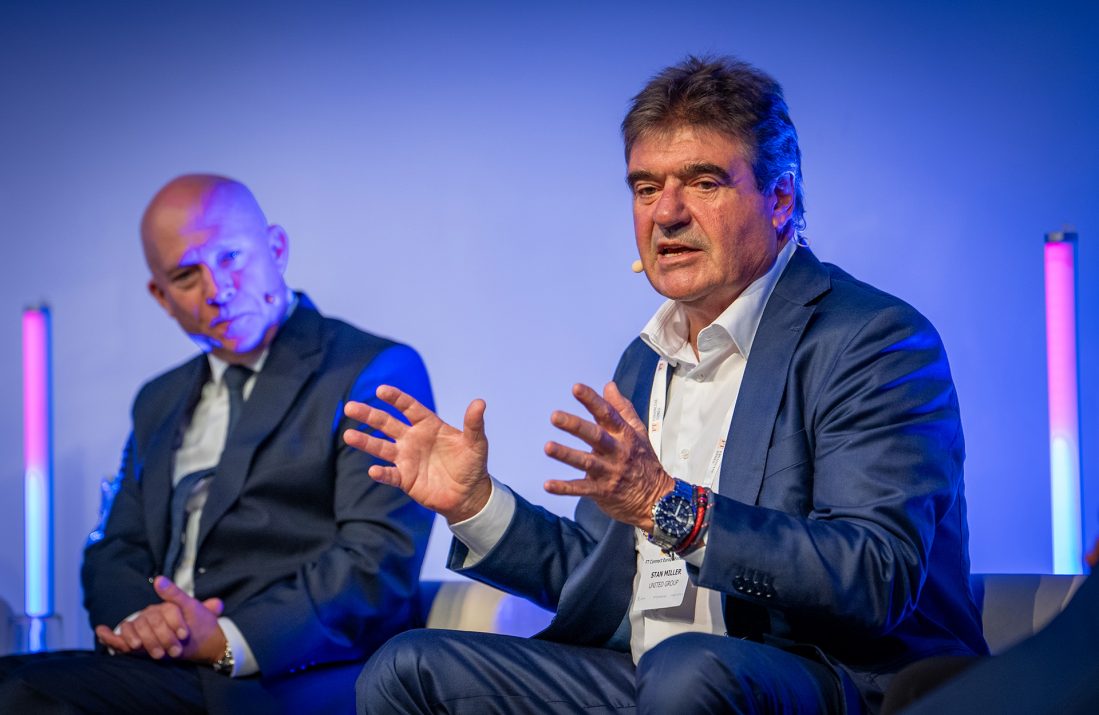
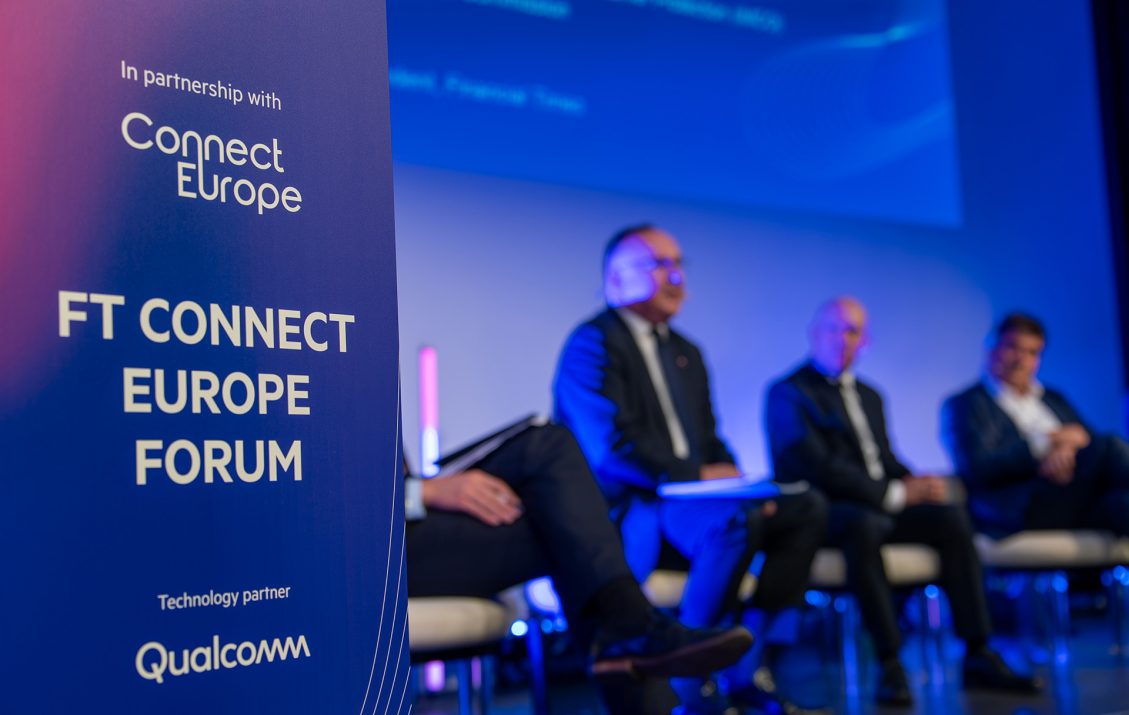
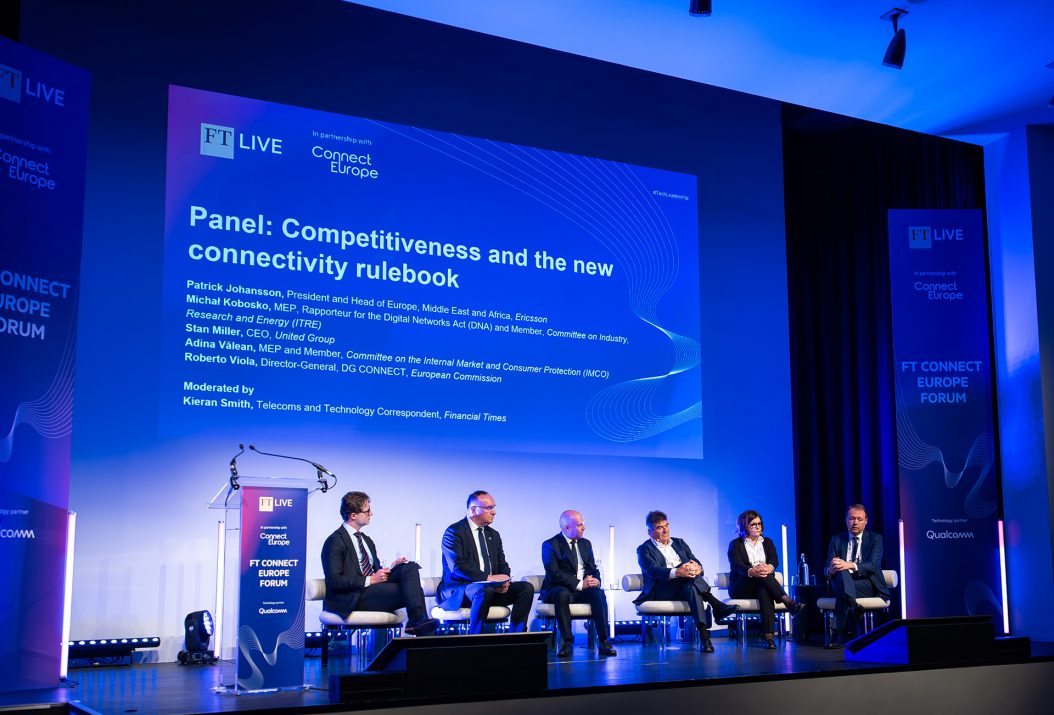
United Group CEO Stan Miller joined senior European policymakers and industry leaders at the FT Connect Europe Forum 2026, speaking on the opening panel, “Competitiveness and the new connectivity rulebook”.
Hosted by the Financial Times in partnership with Connect Europe, the annual forum brought together leading voices from the telecommunications and technology sectors to discuss Europe’s digital future, investment, innovation and competitiveness.
With negotiations between the European Parliament and the Council under way, the participants discussed reactions to the proposed Digital Networks Act, whether it goes far enough to drive investment in Europe’s digital infrastructure, and progress on reducing fragmentation across the single market. Investment was also discussed during closed-door meetings with Brussels officials.
Miller set out four priorities for the Act:
- Spectrum: Award licences indefinitely, giving operators the certainty to invest in infrastructure and coverage and to earn a return on that investment. Spectrum is a scarce public resource whose value is only realised once it is deployed. Europe should therefore reward those who build networks and should not allow frequency squatting by anyone holding spectrum without deploying it.
- Technology neutrality: Set connectivity objectives by the quality of service consumers need, and let operators choose the most cost-efficient way to deliver it. Connecting a whole country almost always takes a mix of technologies, with fixed wireless or satellite often the right answer for isolated rural areas.
- Consolidation: Telecoms are two businesses. The first is infrastructure. It is highly capital intensive, with investment committed over the life of a licence and exposed to changes in technology, the regulatory environment and even natural disasters. Its key measure is the return on equity invested over time. Certainty over the things that can be controlled, such as lifetime spectrum licences and technology neutrality, creates a positive investment case. The second is the commercial business, measured per subscriber and by average revenue per user. Effective investment in networks, together with consolidation, can strengthen that investment case, Consolidation within national markets falls under the merger guidelines now under revision, and the Act and the guidelines need to work together.
- Simplicity and Flexibility: Leave it to operators to slice their networks in whatever way makes the most efficient use of the technology, and remove regulation that prevents this. Doing so will release badly needed investment in networks such as 5G standalone, which support security systems, defence and drone detection. The same applies to specialised services such as connected vehicles, smart grids, digital health and railway signalling, where a Europe-wide framework would replace case-by-case national assessment and give operators the certainty to invest. A simple and predictable framework, applied consistently across the single market, with as little as possible left to later delegated and implementing acts, will benefit Europe’s digital economy and its safety and security, and will help bring new technology to market.

Stan Miller
CEO United Group
“The markets in which we operate are very different, from cities to coastlines and mountains, and I was pleased to make the case to policymakers that operators need the freedom to choose how they connect people, under rules applied the same way across the Union. The markets in which we operate are very different, from cities to coastlines and mountains, and I was pleased to make the case to policymakers that operators need the freedom to choose how they connect people, under rules applied the same way across the Union,”
Miller shared the panel with Patrick Johansson, President and Head of Europe, Middle East and Africa at Ericsson; Michał Kobosko, Member of the European Parliament and Rapporteur for the Digital Networks Act; Adina Vălean, Member of the European Parliament and former European Commissioner for Transport; and Roberto Viola, Director-General of DG CONNECT at the European Commission. The discussion was moderated by Kieran Smith, Telecoms and Technology Correspondent at the Financial Times.
Following the forum, Brussels-based Rapporteur published an article by Stan Miller, titled “Europe’s digital future depends on investment certainty for its networks”, in which he sets out how the Digital Networks Act can provide operators with the certainty needed to continue investing in Europe’s digital infrastructure and deliver cost-effective, efficient connectivity.
Foto credits – Financial Times Live
Photo Gallery