
SUSTAINABILITY

ENVIRONMENT
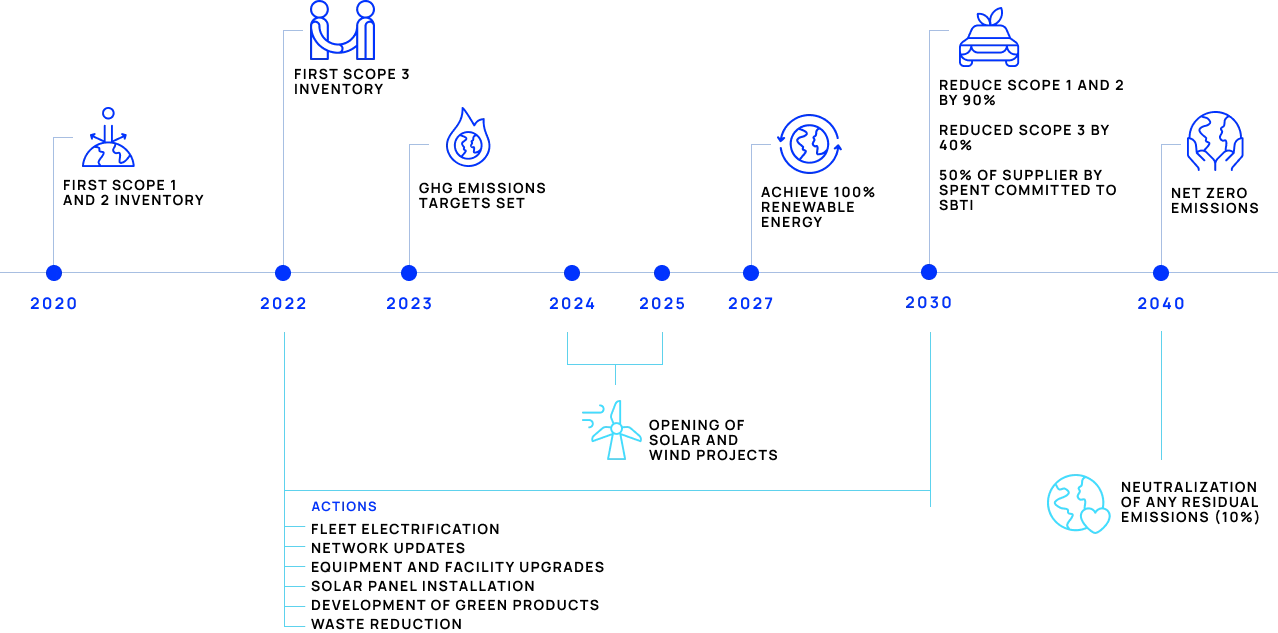
Net Zero by 2040
Recognizing the potential impacts of our operations, we are dedicated to leading the way towards a sustainable and greener future. In alignment with global efforts to combat climate change, we have set an ambitious goal to reach net-zero emissions across our entire value chain by 2040.
In order to do that we have shaped a roadmap with clear and measurable targets, outlining the steps we will take to reduce our carbon footprint. Through rigorous analysis and strategic planning, we ensure that each milestone brings us closer to our ultimate net-zero target. Demonstrating our commitment to transparency and accountability, our targets are not only internally validated but also approved by the Science-Based Targets initiative (SBTi).
Our validated science-based targets include:
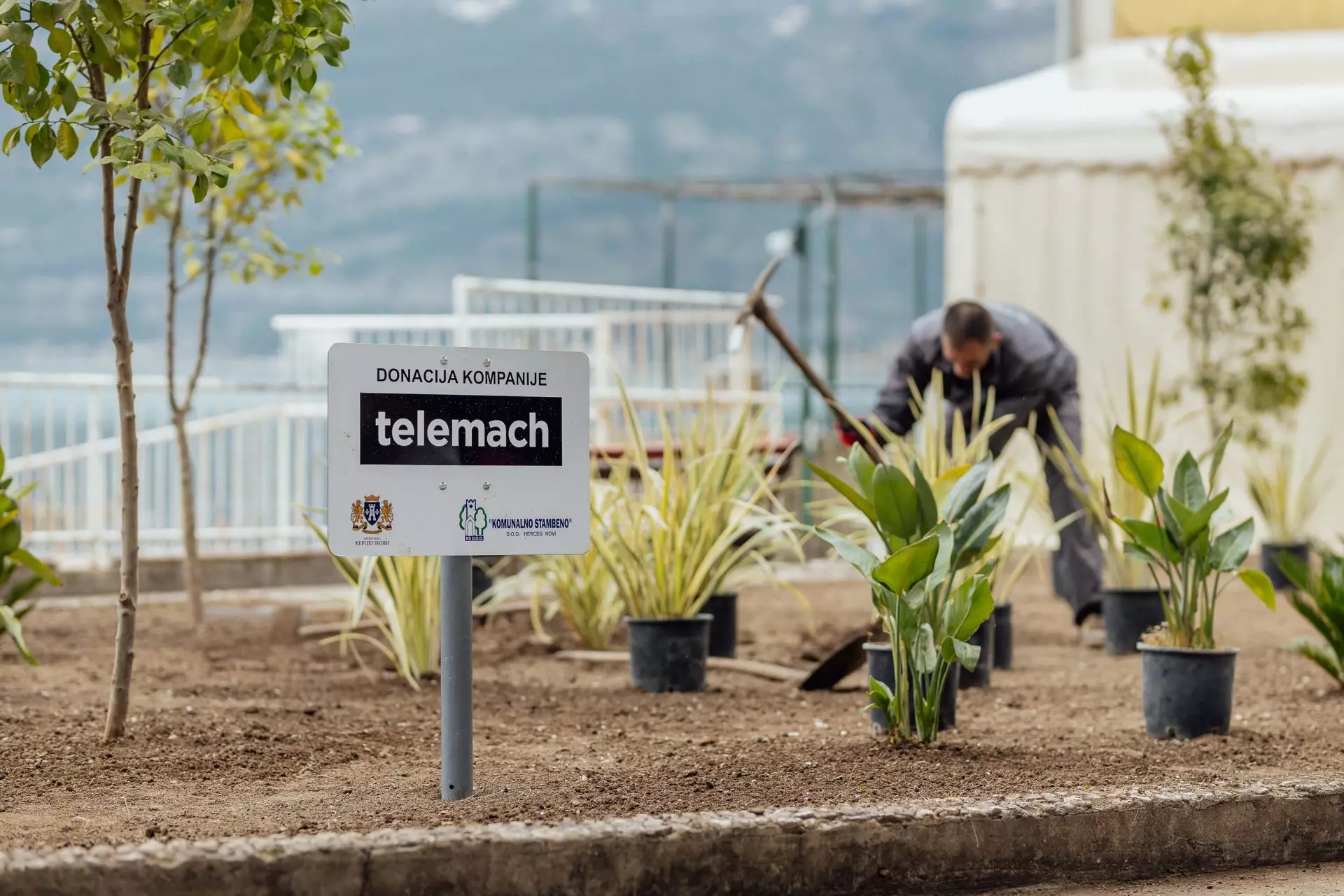

Reaching net-zero greenhouse gas emissions across the value chain by 2040.

Reducing absolute scope 1 and 2 GHG emissions by 90% by 2030 from a 2020 base year.

Reducing scope 3 GHG emissions covering purchased goods and services, capital goods, fuel- and energy-related activities and business travel 40% by 2030 from a 2022 base year

Maintaining at least 90% absolute scope 1 and 2 emission reductions from 2030 to 2040,using the 2020 base year.

Reducing absolute scope 3 GHG emissions covering purchased goods and services, capital goods and fuel- and energy-related activities 90% by 2040 from a 2022 base year.
Science-based targets, as recognized by SBTi, provide a robust framework for companies like ours to navigate the path towards greenhouse gas emissions reduction. It ensures alignment with the latest climate science and the goals of the Paris Agreement, aiming to limit global warming to 1.5°C above pre-industrial levels. In addition, we have committed to:

Increase active annual sourcing of renewable electricity 100% by 2027 and to continue active annual sourcing of 100% renewable electricity.

Having 50% of our suppliers by spend to have committed to SBTi validated carbon reduction targets by 2030.
Our Net-Zero Journey
This strategic approach not only supports emissions reduction throughout the value chain but also underscores our dedication to ongoing innovation and collaboration, driving towards a sustainable and resilient future.


Scope 1: Our Fleet & Operations
We take pride in our commitment to environmental sustainability, which extends to the proactive management of our direct operational impact. Scope 1 greenhouse gas (GHG) emissions, representing those generated directly from our activities, are a key focus area in our sustainability efforts. We have undertaken a comprehensive assessment of our Scope 1 emissions, allowing us to set realistic reduction targets and track our progress over time.
We continue implement projects to reduce our scope 1 emissions including:
Scope 2: Our Energy Consumption
As a telco operator, electricity is a significant source for our operations. We have already seen promising improvements resulting from our energy efficient networks upgrades (e.g., FTTH and 5G) for both our fixed and mobile customers and our investment in small-scale solar panels installation and green energy procurement will continue to support scope 2 reductions.
Additionally, we have invested in four large-scale solar and onshore wind renewable energy production projects in Bulgaria with a combined peak capacity of 120 MWP.
Energy strategy
Scope 3: Value Chain
We recognize the imperative of addressing our environmental impact comprehensively. While our direct operations contribute to a portion of our carbon footprint (Scope 1 and Scope 2 emissions), we acknowledge that an even more significant share lies within our value chain. Scope 3 emissions encompass the indirect greenhouse gas emissions generated by activities associated with our business but occur at sources not owned or controlled by us. Despite not having direct responsibility for these upstream and downstream emissions, we understand the vital role they play in our overall environmental impact.
To achieve our net-zero goal, we are committed to collaborating with our suppliers and partners. We recognize the need to work collectively to address and reduce Scope 3 emissions across the value chain.
Our main upstream and downstream emission categories include:

Taking Action: Inventory and Reduction
In 2022 we have conducted a comprehensive inventory of our Scope 3 emissions, identifying key sources and areas for improvement. This transparency is crucial in guiding our efforts to reduce our overall environmental impact. By actively engaging with our suppliers and partners, we are implementing measures to enhance efficiency, adopt cleaner technologies, and minimize the environmental impact associated with our value chain. This collaborative approach ensures that we address the entirety of our carbon footprint and work towards a sustainable and resilient future. For our downstream emission, we have already seen inspiring results for our customers following the roll out of new energy-efficient measure in our products and we will continue to innovate to reduce our downstream value chain emissions.
In our net-zero journey, every individual and stakeholder play a crucial role. From our dedicated employees to valued suppliers and loyal customers, each participant contributes to the success of our carbon reduction strategy.

FLEET ELECTRIFICATION
Increase number of electric vehicles (EVs) in our fleet to reduce fuel consumption

HVAC UPGRADES
Installing high-efficiency heating, ventilation, and air conditioning (HVAC) systems and use smart thermostats to regulate temperature.

INSULATION AND WEATHERIZATION
Improving building insulation and seal any gaps to reduce heat loss in winter and heat gain in summer.


ENERGY MANAGEMENT SYSTEMS(EMS)
Implementing EMS to monitor and control energy usage in real-time, optimizing lighting, HVAC, and other systems for efficiency

FUEL SWITCHING
Replace fossil fuel-based heating systems with electric or renewable alternatives.
LARGE SCALE WIND AND SOLAR PROJECTS
Three large scale solar projects and one on-shore wind project.

ON-SITE SOLAR
Installing solar panels on rooftops or in adjacent areas to generate clean, on-site renewable energy.

LED LIGHTING:
Replacing traditional lighting with energy-efficient LED lighting to reduce electricity consumption
Timeline From 2020 To 2040